




From “Fun Activity” to Intentional Teaching Strategy
Game-based learning is not new.
What is new is how easily we can now create games using AI tools. With platforms like Canva, a teacher can design an interactive learning game in a short amount of time—something that previously required technical expertise. Let’s see this game!
Grow & Learn: Plant Adventure Game by Thuc Phan C.
But this raises an important question:
👉 If creating games is now easy, what makes them educationally meaningful?
🎮 The Shift: From Playing to Learning
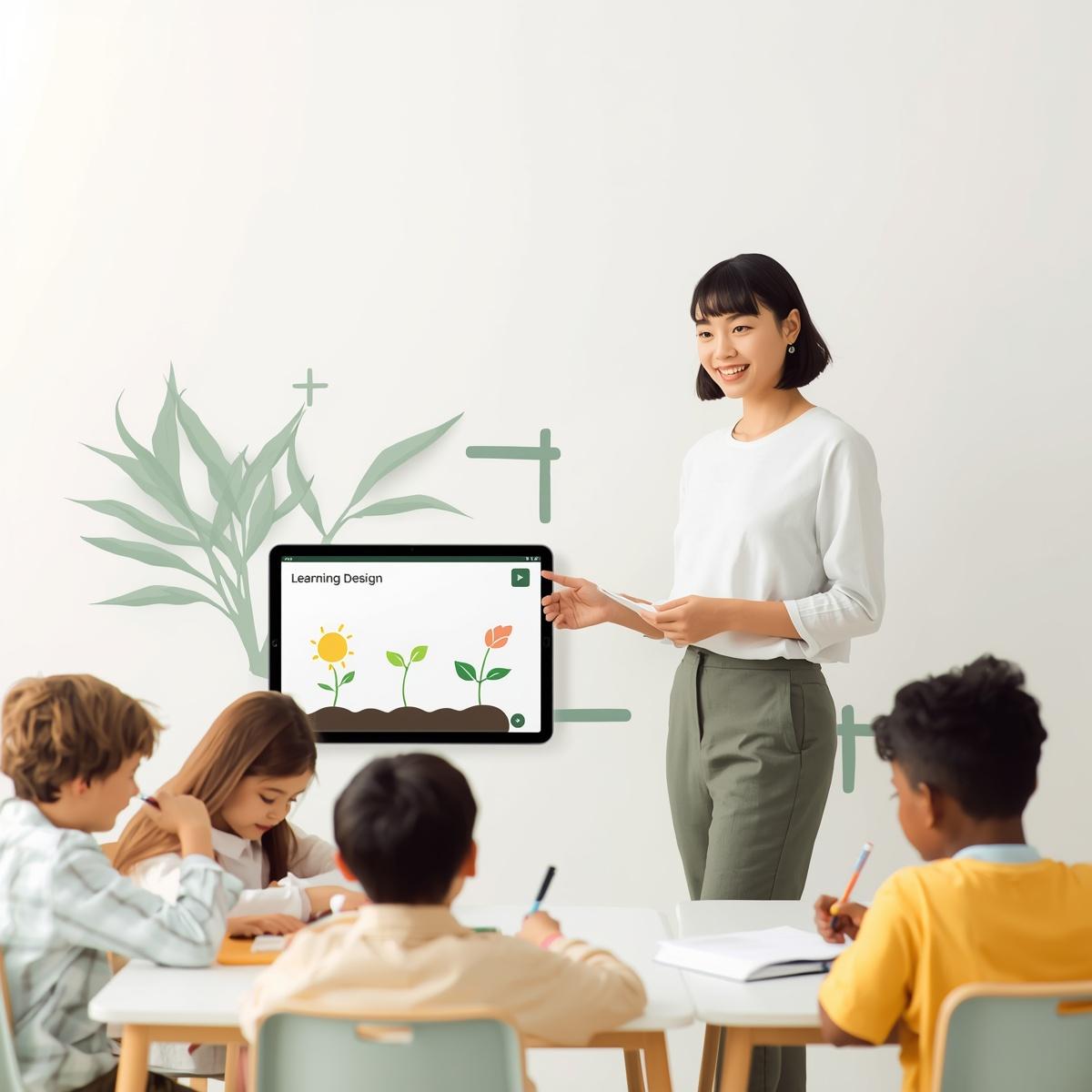
Recently, I designed a simple web game, “Grow & Learn: Plant Adventure”, to help Kindergarten students understand plant life cycles.
On the surface, it looks like a typical educational game:
- Drag-and-drop
- Tap-to-select
- Bright visuals and rewards
But the real value does not come from the game itself.
It comes from how the game is positioned within the learning experience.
🧠 A Broader Perspective Beyond One Approach
While my classroom practice is often inspired by approaches like Montessori or IB PYP, the use of game-based learning does not belong to any single methodology.
In fact, well-designed learning games can support:
- Structured skill-building (direct instruction models)
- Inquiry and exploration (concept-based learning)
- Differentiation for diverse learners
- Independent and self-paced learning environments
👉 The strength of game-based learning is its flexibility across pedagogical approaches.
⚖️ Where Many Classrooms Get It Wrong
A common pattern I observe:
- Games are used as rewards
- Games are used for “extra practice”
- Games are disconnected from the main lesson
In these cases, students may be engaged—but not necessarily learning deeply.
👉 Engagement without intention is not effective teaching.
🔄 A More Intentional Use of Games
Instead of asking:
“When can I use a game?”
Consider:
“What learning purpose does this game serve?”
For example, the same plant game can be used to:
- Introduce vocabulary (before a lesson)
- Reinforce sequencing (during learning)
- Assess understanding (after learning)
👉 The timing and integration change the learning impact.
🌍 Supporting Diverse Learning Needs
One of the strongest advantages of game-based learning is differentiation.
In a single classroom, students can:
- Work at different levels of difficulty
- Learn at their own pace
- Receive immediate feedback
- Revisit concepts independently
This is especially valuable for:
- Language learners
- Students who need repetition
- Students who benefit from visual and interactive input
👉 A well-designed game becomes a flexible support system, not just an activity.
🤖 The Role of AI: Opportunity or Shortcut?
AI allows teachers to create faster—but it can also lead to:
- Overproduction of low-quality activities
- Focus on visuals instead of learning goals
So the real shift is this:
👉 Teachers are no longer just content users
👉 They are now learning designers
💡 A Practical Reflection for Teachers
Before adding a game to your lesson, ask:
- What exactly should students understand after this?
- How does this game connect to my learning objective?
- What will students do after playing?
👉 The answer to the third question often determines whether real learning happens.
🚀 For Teachers at Different Stages
Experienced Educators
This is an opportunity to:
- Rethink existing lesson structures
- Integrate flexible, scalable learning tools
- Design more responsive and differentiated learning environments
New Teachers
This is your advantage:
- You can start with practical tools
- Build ready-to-use teaching resources
- Enter the classroom with adaptable strategies
🌟 Final Thought
AI will not replace teachers.
But it will change what effective teaching looks like.
The value is no longer in having activities—
It is in designing meaningful learning experiences around them.
👉 A simple game can remain a simple game.
👉 Or it can become a powerful tool for thinking, differentiation, and growth.
The difference is not the technology.
It is the teacher.
AI in Education- Redefining role of teachers by Thuc Phan C.